Why Most AI Chatbots Fail at Lead Conversion

The Promise vs. The Reality
Artificial intelligence has fundamentally changed how businesses communicate with potential customers. AI-powered chatbots now sit at the front lines of digital sales greeting website visitors, answering product questions, qualifying leads, and nudging buyers toward conversion around the clock. The pitch is compelling: deploy once, scale infinitely, convert continuously.
But a growing gap between expectation and outcome is forcing businesses to ask an uncomfortable question. If AI chatbots are so capable, why are conversion rates still so low? Why do leads keep dropping off mid-conversation? Why does the pipeline show activity but revenue tells a different story?
The answer is not that the technology is broken. The answer is that most chatbots are built the wrong way designed around company convenience rather than buyer behaviour, optimised for engagement volume rather than conversion quality, and deployed without the intelligence needed to truly understand what a buyer needs in the moment.
This blog breaks down the real reasons AI chatbots fail at converting leads, what the data tells us, and how an intelligent, buyer-first approach changes the outcome entirely.
What Is Actually Going Wrong on the Ground
Walk into any sales and marketing team that has deployed an AI chatbot in the last three years and you will hear a version of the same story. The chatbot went live with high expectations. Traffic was captured. Conversations happened. Leads were logged. But when the sales team followed up, quality was poor, buyers had not truly committed, and deals did not close at the rate that was promised.
This is not an isolated experience. It is a pattern that repeats across industries e-commerce, SaaS, financial services, real estate, and healthcare. The root causes are remarkably consistent.
Rigid Scripts That Cannot Follow Real Conversations
Most AI chatbots are built on decision trees pre-written scripts that branch based on the buyer's responses. The problem is that buyers do not follow scripts. They loop back, ask unexpected questions, change their requirements mid-conversation, and introduce context the chatbot was never designed to handle. The moment a buyer deviates from the expected path, the chatbot either repeats itself, sends a generic response, or loses the thread entirely. The buyer disengages. The lead is lost.
Data Collection Mistaken for Engagement
Many chatbots are configured to prioritise capturing contact information above everything else. Buyers instinctively resist this. They are being asked to give before they have received. The moment a chatbot feels like a data harvesting form dressed up as a conversation, trust evaporates and so does the lead.
One-Size-Fits-All Responses
A first-time visitor casually exploring your product has very different needs from a returning buyer who has already read three case studies and is comparing you against a competitor. Yet most chatbots treat both identically same greeting, same questions, same call to action regardless of context. This absence of genuine personalisation signals to buyers that they are interacting with a system that does not actually understand them, which is precisely the opposite of what builds conversion confidence.
No Memory Between Sessions
A buyer who had a productive conversation on Tuesday returns on Thursday to continue their research. The chatbot greets them as if they have never spoken before. Every piece of context shared in the first conversation is gone. The buyer is asked to start from scratch. This experience does not just frustrate buyers it communicates that the business does not value the relationship. In a competitive landscape, that impression is fatal to conversion.
Slow and Context-Free Follow-Up
Even when a chatbot successfully identifies a high-intent lead, the handoff to the sales team is frequently broken. Conversation context does not transfer. The sales rep follows up hours or days later with a generic email. By the time they reach out, the buyer has moved on, the moment of peak interest has passed, and the conversion opportunity is gone.
Stop Losing Leads to Broken Chatbots
We help B2B companies design and implement intelligent chatbot systems that actually convert.
The Cost of Getting This Wrong
The consequences of chatbot conversion failure are not abstract. They translate directly into lost revenue, wasted budget, and missed growth opportunities. The data, and the companies that have lived through these failures, make the scale of the problem impossible to ignore.
The Numbers Don't Lie
Data from IBM, Microsoft, Gartner, Drift/Salesloft, Agentive AIQ, and WorkHub research.
Fail to Identify Intent
of chatbots can't correctly route high-intent leads
Less Likely to Convert
bot-only conversations vs. those involving a human agent
Sales to First Responder
yet most companies take 48+ hours to reply
Where B2B Chatbots Break Down
of users abandon if they don't get a response in under 2 minutes.
Source: Forrester via SDH Global
The Evidence: Here are the Stats & Findings
Critical insights from IBM, Microsoft, and global sales research.
AI Chatbots Can Predict Purchase Intent: But Most Don't
IBM's research on AI-powered lead generation demonstrates that machine-learning models can accurately predict which users are most likely to purchase, enabling automated lead-quality scoring that focuses sales teams on high-fit prospects rather than low-intent traffic. IBM's Watson Assistant deployments across banking, telecommunications, and insurance clients have documented double-digit percentage improvements in lead-qualification speed and significant reductions in low-quality leads passed to sales teams.
The capability exists. The problem is that the vast majority of deployed chatbots are not using it. Instead of intelligent lead scoring and routing, most chatbots operate on rigid scripts that treat every visitor identically, squandering the predictive power that AI is actually capable of delivering.
Source: IBM Think : AI Lead Generation | Chatbots for Sales & Marketing
1,000+ AI Transformation Stories Show What's Possible
Microsoft's 2025 collection of over 1,000 customer transformation stories includes extensive documentation of AI-driven sales and customer-service deployments using Azure AI. These case studies describe automated lead-qualification workflows integrated with Dynamics 365, where AI agents screen inbound inquiries and route only high-intent leads to sales representatives.
The pattern is clear: when AI is designed around buyer intent detection rather than data extraction, conversion rates improve measurably. Yet these represent the minority of deployments. Most organizations are implementing chatbots as standalone widgets disconnected from their CRM, failing to replicate Microsoft's documented success stories.
Source: Microsoft Cloud Blog : 1,000+ Customer Transformation Stories
Case Studies: Real-World Chatbot Failures and Successes

EcoTech Solutions: 84% Lead Increase Through Redesign
EcoTech Solutions (B2B SaaS) shifted from traditional forms to an AI-powered chatbot with behavioral intent detection.
Replaced manual follow-ups with instant, context-aware engagement.
Achieved 84% increase in monthly leads (from 320 to 588).
Boosted conversion rate by 75% (to 21%).
Reduced response time by 70%.
IBM Watson Assistant in Banking: Qualification Speed
A major banking institution used IBM Watson Assistant to automate mortgage and loan inquiry qualification.
Automated triage replaced manual review of form submissions.
Double-digit % improvement in lead qualification speed.
Filtered out low-fit leads, allowing loan officers to focus on closing.
Improved customer satisfaction with immediate responses.
Microsoft Dynamics 365 + AI Agents: Conversion Success
A financial services firm integrated AI agents with Microsoft Dynamics 365 to screen inbound inquiries.
AI screened inquiries and routed high-intent leads to advisors.
Mid-teens % improvement in qualified-lead-to-client conversion.
Response times dropped from hours to seconds.
Deep CRM integration allowed seamless context transfer.

Cautionary Case: When Bot-Only Conversations Kill Conversions
Drift's analysis of over 30 million B2B conversations reveals a stark truth: bot-only conversations are 66% less likely to convert into an opportunity compared to conversations that involve a human agent at any point.
Failure Pattern 1: No Human Escalation Path. Requests to speak with a human agent increased 2.5× from 2022 to 2023, yet most deployments lack seamless handoff mechanisms. When buyers need to escalate and can't, they leave.
Failure Pattern 2: Slow Response After Bot Handoff. Live agents have a 2-minute window after a chatbot interaction to engage. Waiting 5 minutes increases the risk of departure by 10×.
Failure Pattern 3: Missing After-Hours Coverage. Organizations that deploy chatbots without after-hours intelligent routing lose nearly half their conversion opportunities entirely.
What Intelligent AI Does Differently
The failures described above are not inevitable. The top-performing chatbot deployments those achieving conversion rates of 10 to 15% share a common set of characteristics that distinguish intelligent AI from feature-rich but strategically shallow implementations.
Companies that use AI-powered sales automation tools see conversion rates increase by 25% on average. AI SDRs qualify prospects three times faster, reduce response time by 65%, and improve meeting conversion rates by 40%. Critically, companies implementing comprehensive AI lead generation strategies report 76% higher win rates, 78% shorter deal cycles, and revenue improvements of 10 to 20%. (Source: Persana AI : AI Lead Generation Case Studies)
The difference between those results and the 2.35% industry average is not a technology gap, it is a design and strategy gap. Here is what intelligent AI does differently.
Intent Detection Before Data Collection
An intelligent chatbot does not open a conversation by asking for a name and email. It opens by understanding who this visitor is and what they need. Before the first message is sent, the system has already assessed the visitor's behavioural history, the content they have engaged with, how many times they have visited, and what their current session signals about their intent. The conversation is shaped by that intelligence from the very first word.
Dynamic Conversation Flows
Rather than following a fixed script, an intelligent chatbot adapts in real time based on what the buyer says and how they say it. If a buyer introduces new context, a larger team, a tighter deadline, a specific integration requirement, the system incorporates that and adjusts accordingly. The conversation feels responsive because it is responsive. Buyers stay engaged because they feel heard.
Deep Personalisation Across Sessions
Intelligent AI maintains memory across sessions and uses it purposefully. A returning visitor is greeted with context from their previous conversation. Their stated needs, their concerns, their decision stage, all preserved and surfaced at the right moment. This continuity transforms a series of disconnected transactions into an ongoing relationship.
Emotional Intelligence and Tone Adaptation
Buyers express urgency, hesitation, frustration, enthusiasm, and scepticism in how they phrase questions and responses. An intelligent chatbot detects these emotional signals and adjusts its tone and approach accordingly. A buyer signalling urgency gets a more direct, action-oriented conversation. A buyer showing hesitation gets reassurance, social proof, and space to ask more questions before being pushed toward a decision.
Honest Escalation to Human Agents
One of the most powerful things an intelligent chatbot can do is recognise when it should stop being a chatbot. When a buyer's question exceeds the system's reliable knowledge, or when a buyer signals readiness to decide, the intelligent response is to escalate immediately to a human agent, with full conversation context transferred so the buyer does not have to repeat a single thing.
Integrated, Instant Follow-Up
Every insight captured in a chatbot conversation must reach the sales team in real time and in structured, actionable form. High-intent conversations should trigger automated alerts prompting human follow-up within five minutes. The follow-up message should reference the specific conversation (the buyer's stated needs, their concerns, the products they showed interest in) instead of a generic template.
How Tectome Can Add Value
Tectome isn't just a software provider; we are your conversion partner. Our platform utilizes advanced intent detection to assess behavioral history in real-time, identifying high-intent visitors and automatically implementing personalized engagement protocols that double meeting conversion rates.
Solution Demo
See how intelligent AI converts leads through intent detection, dynamic flows, and emotional intelligence.
Tectome: AI That Is Built to Convert
At Tectome, we have spent years studying why AI chatbots underperform and building the solution. Our conversational AI platform is not a decision-tree chatbot dressed up with a modern interface. It is an intelligent, buyer-first system designed from the ground up to convert leads by genuinely understanding the people it speaks with.
Every Tectome deployment is built around three core principles: understand the buyer before asking anything of them, serve the buyer's decision process rather than the company's data extraction agenda, and close the gap between chatbot conversation and human follow-up with speed and precision.
We Start With Your Buyer, Not Your Script
Before we deploy anything, we work with your team to map your buyer personas, decision journeys, and conversion triggers. Every Tectome implementation is built around the specific behaviour of your specific buyers, not a generic chatbot template that gets adapted at the margins.
Our AI Detects Intent in Real Time
Tectome's platform continuously reads behavioural signals, page visits, session depth, return frequency, content engagement, and uses them to calibrate every conversation from the first message. Your highest-intent visitors receive a more direct, conversion-focused experience. Your early-stage explorers receive a value-first conversation designed to build familiarity and trust. The right conversation happens at the right time, automatically.
We Remember Every Conversation
Tectome maintains full conversational memory across sessions and integrates directly with your CRM. Returning buyers are recognised and greeted with context. Sales representatives receive full conversation summaries before they make first contact. Nothing is lost between the chatbot and the human conversation that follows.
We Close the Follow-Up Gap
High-intent signals detected by Tectome's AI trigger immediate alerts to your sales team. Our platform is built around the five-minute follow-up standard because we know what the data shows about timing and conversion, and we have engineered our system to meet that standard consistently.
We Measure What Actually Matters
Tectome's analytics go beyond engagement metrics. We track lead quality scores, pipeline progression, opportunity conversion rates, and revenue attribution from chatbot-initiated conversations. You will always know exactly what your AI investment is returning not in conversations, but in closed deals.
Ready to See the Difference?
Visit www.tectome.com to book a personalised demo and see how our conversational AI platform can transform the way your business converts leads.
Tectome. AI that understands people. AI that converts.
Related Insights
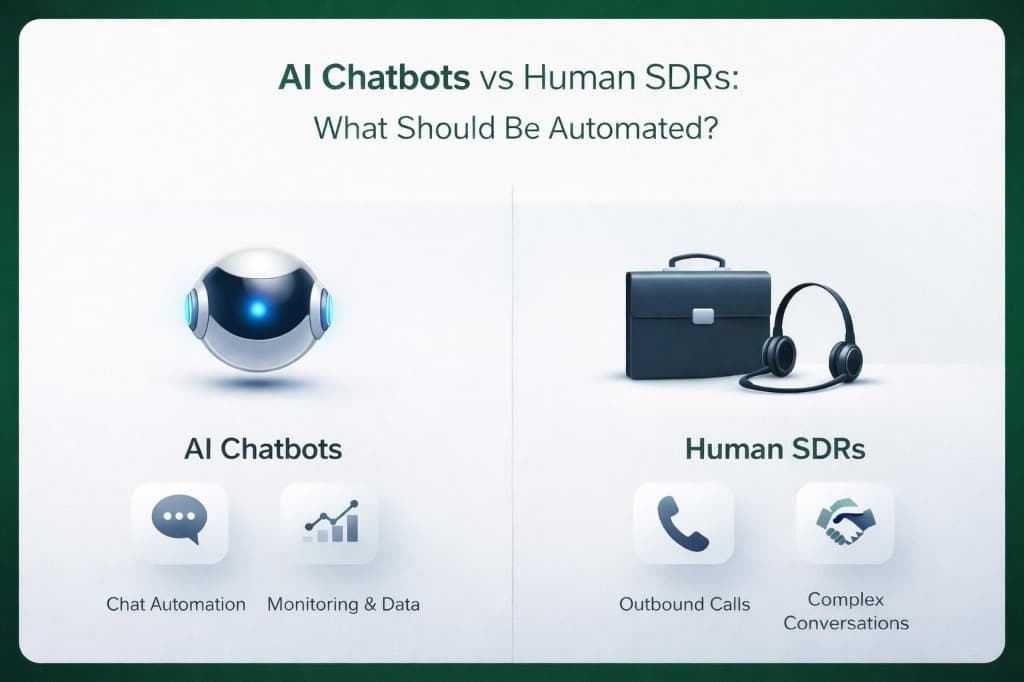
AI Chatbots vs Human SDRs: What Should Be Automated?
Should AI chatbots replace human SDRs? Discover why automation should run the front of the funnel.
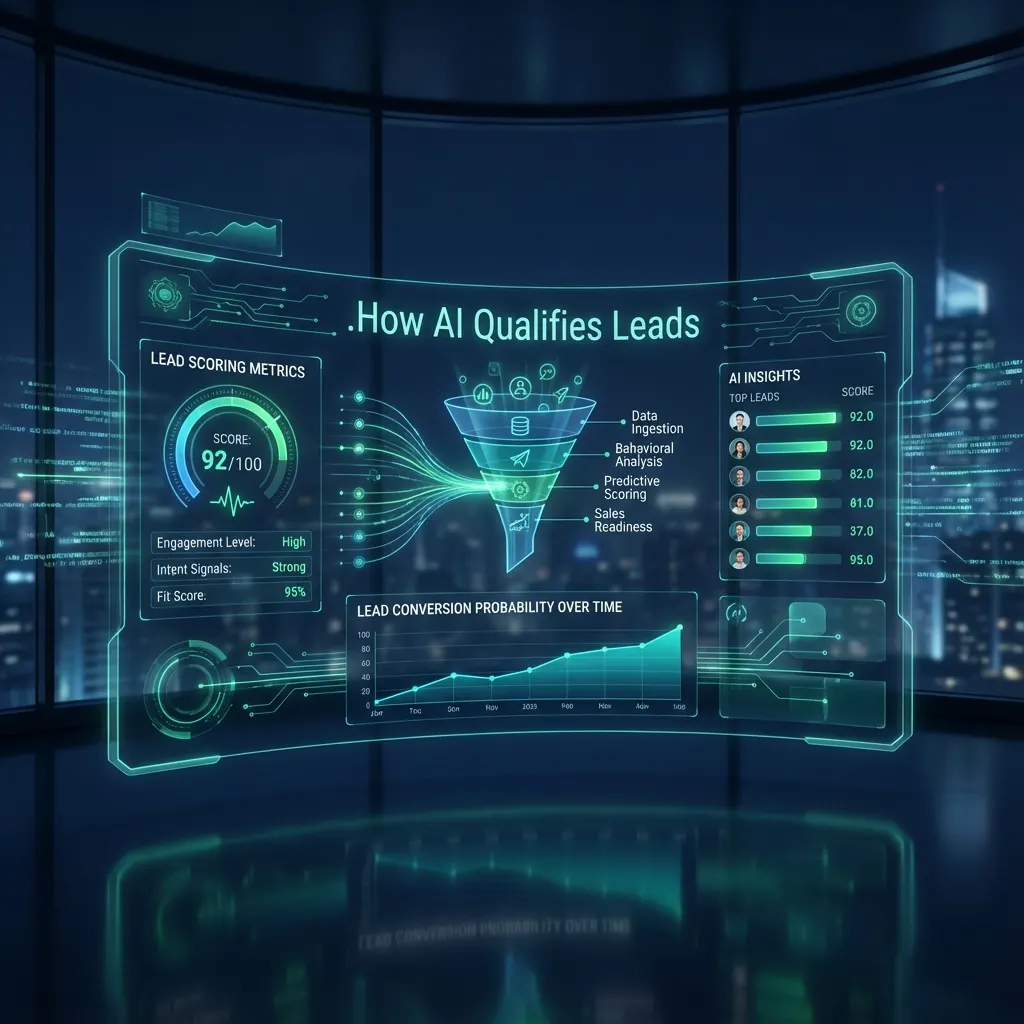
How AI Qualifies Leads: Before Your Sales Team Talks to Them
Stop wasting time on unqualified leads. Learn how AI analyzes 20+ signals in under 60 seconds.
From our work
Read how we did this for…


Accelerate your roadmap with AI-driven engineering.
Click below to get expert guidance on your product or automation needs.