Build vs Buy: When to Build Custom Internal Software Instead of Buying SaaS
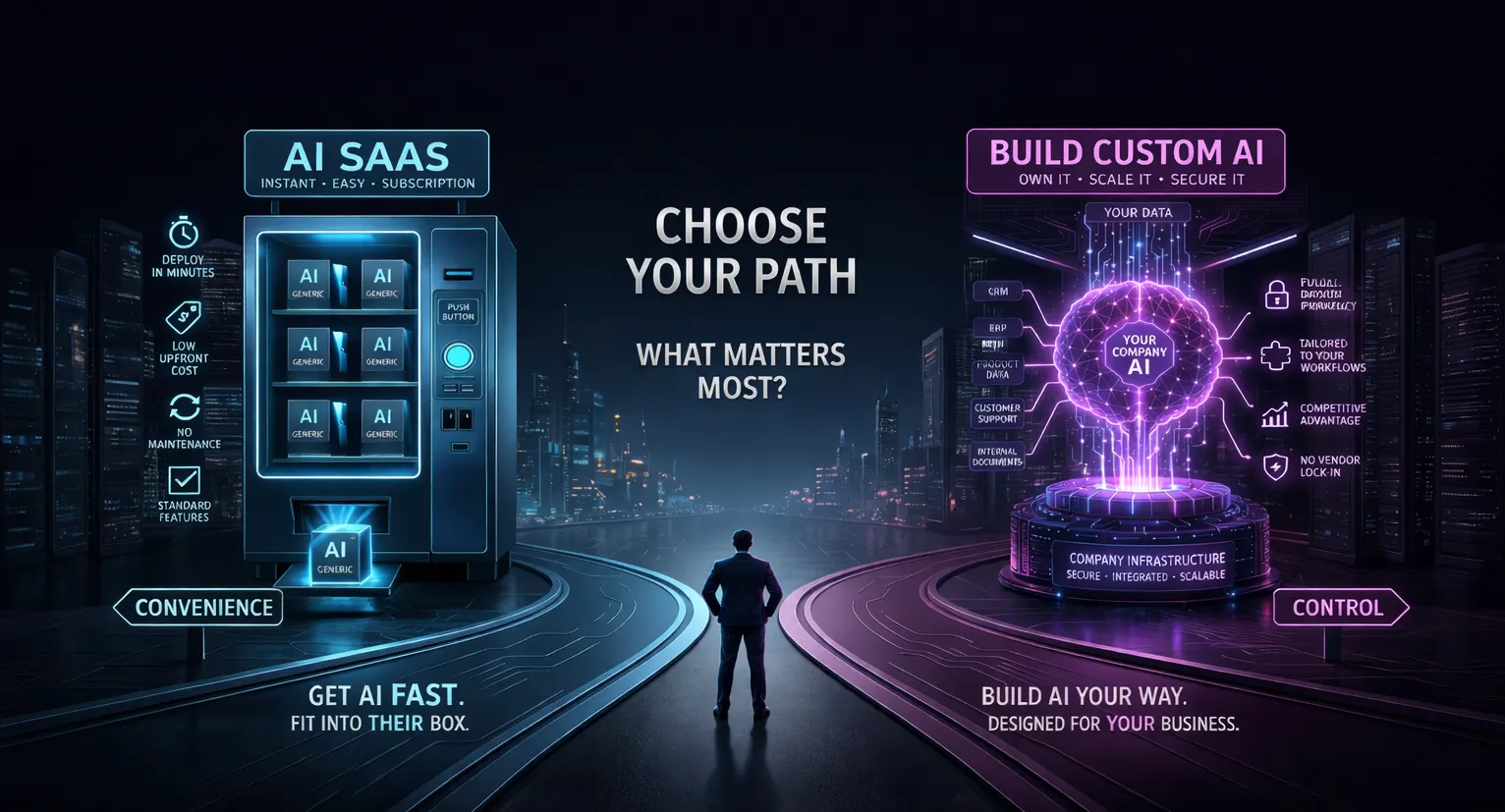
SaaS solves speed.
Custom software solves fit.
Everyone loves the promise of SaaS: fast setup, automatic updates, and less operational overhead. But when workflows, integrations, compliance requirements, or data models become too specific, SaaS can become a bottleneck instead of an accelerator.
The real decision is not simply build versus buy. It is whether a company should keep renting software designed for the average customer or own software designed for its exact operations.
SaaS Advantage
SPEED
Fastest time to market for standard business functions.
Custom Advantage
FIT
Perfectly tailors the software to your unique core logic.
The SaaS Ceiling
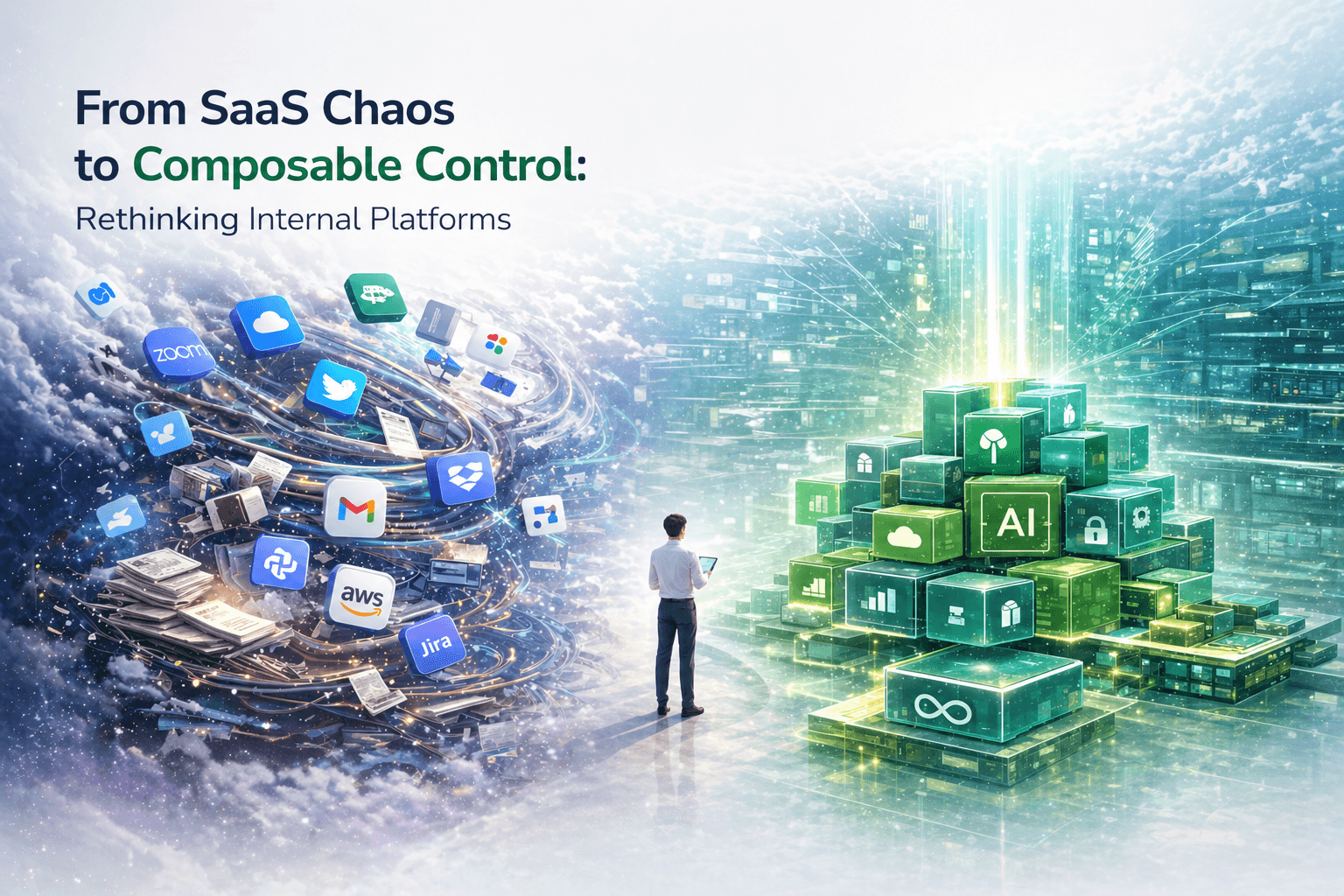
Most SaaS platforms are strong for standard workflows, but they become harder to justify when teams start layering workarounds on top of workarounds. Common signs a team is hitting the SaaS ceiling:
Organisations utilise less than 40% of the SaaS features they pay for.
True five-year SaaS TCO runs 150-200% above list price when integration and admin overhead is factored in.
SaaS vendors now charge 30-100% more for AI-powered features added onto existing subscriptions.
- Per-seat pricing scales faster than the value the tool actually creates
- Teams still need significant engineering time to customise bought software
Once a company starts reshaping its operations to fit the software rather than shaping software to fit the business, the platform has usually become a constraint.
When Custom Starts Winning
Custom internal software becomes a stronger option when the workflow is operationally central, long-lived, and too specific for off-the-shelf tools to support well. The signals that custom is the stronger path:
Revenue Growth
Organisations with proprietary core technology report revenue growth roughly 2x that of peers on third-party SaaS stacks (Deloitte 2025).
Productivity Boost
Teams replacing SaaS workflow tools with custom AI orchestration report 35-55% operational productivity improvements.
- AI-assisted development now automates roughly 30% of developer code-writing, compressing build timelines significantly.
- 90% of enterprise software engineers will use AI code assistants by 2028 (Gartner).
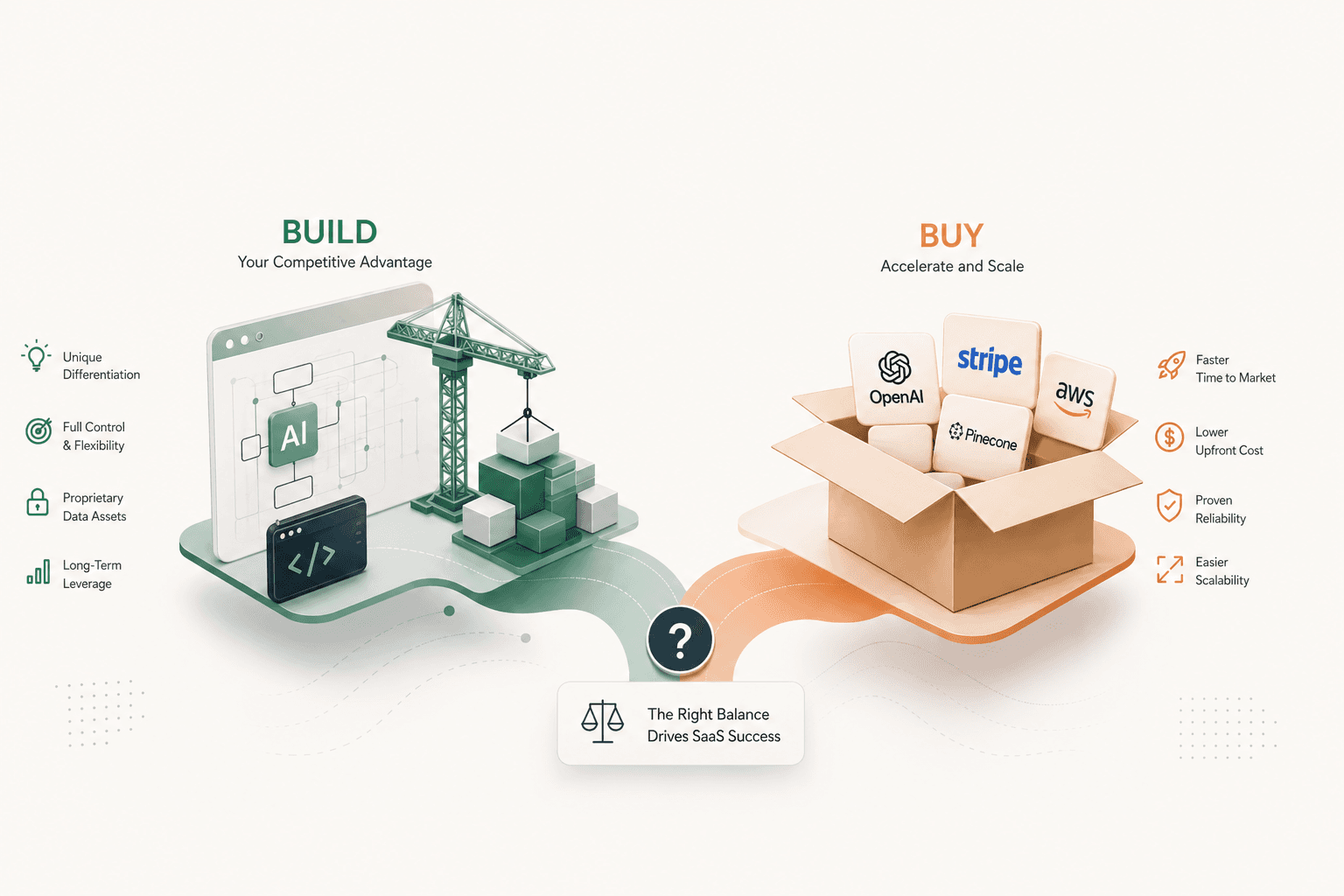
- A hybrid model, buy for commodity, build for differentiation, consistently outperforms all-SaaS or all-custom approaches.
The most important shift is strategic. Strong teams no longer ask whether custom software is more expensive upfront. They ask whether renting a poor-fit platform creates more long-term drag than owning the right system.
The New Economics of Building
AI-assisted development has changed the equation by reducing the time required to prototype, ship, and iterate internal tools. What used to take a six-person team three months can now be prototyped in days with focused scope and the right tooling.
This is why more companies are reconsidering custom software for internal dashboards, workflow orchestration across SaaS products, and role-specific tools for support, sales, operations, or compliance teams.
In 2026, the question is less "Can this be built?" and more "Should this capability remain trapped inside a generic subscription product?"
Real Organisations That Made the Shift
Klarna
Klarna replaced over 1,200 SaaS subscriptions, including Salesforce and Workday, with in-house AI-powered systems, cutting costs significantly and doubling revenue per employee within twelve months.
View Full ReportWalmart
Walmart built Element, a proprietary internal AI platform, instead of buying more tools, deploying it across millions of associates and later commercialising it as an external product.
Read Tech BlogIBM Enterprise Clients
IBM Enterprise Clients shifted from point SaaS tools to custom AI orchestration agents, consistently outperforming on productivity metrics and cutting operational handling times significantly across security and support functions.
View IBM ReportWhat Most Teams Misjudge
Teams often make poor build-versus-buy decisions because they compare only upfront engineering cost to first-year subscription price. A better decision process weighs total cost, operational friction, control, and strategic fit across a multi-year horizon, not a single budget cycle.
Decision Framework
Lean toward custom internal software when most of these are true:
The workflow is core to how the business operates or competes.
The need will exist for several years, not just one project cycle.
Existing SaaS tools still require major workarounds or companion systems.
Control over integrations, data, or compliance is non-negotiable.
The team can ship a focused MVP rather than attempting a bloated platform from day one.
How Tectome Helps
Reducing operational pain points
We map your workflows, identify where SaaS tools are creating friction, and build lightweight AI-powered internal tools that eliminate those bottlenecks.
Improving efficiency
We design custom automation pipelines and internal platforms that work with your existing stack, so your team gets tools shaped around how they actually operate.
Driving revenue growth
We help identify which internal capabilities have commercial potential and build customer-facing tools designed around your specific buyer journey.
Increasing conversions
We build bespoke lead scoring engines, AI-powered follow-up systems, and real-time dashboards that adapt to your sales motion, not a generic vendor template.
Free SaaS Audit
We start with a no-obligation audit of your current SaaS stack to identify where building would deliver the greatest return.
Key Takeaways
SaaS is strongest for standard functions and speed. Custom software wins when the workflow, logic, or integration model is unique to the business.
The companies making this decision well don't frame it as ideology. They buy for commodity and build for leverage.
Related services
Ready to Design Your Custom Software Strategy?
Don't let generic SaaS tools limit your growth. Build the software your business actually deserves.
From our work
Read how we did this for…
Accelerate your roadmap with AI-driven engineering.
Click below to get expert guidance on your product or automation needs.