Headless CMS Showdown: Choosing the Right Platform for Scalable E-Commerce Sites
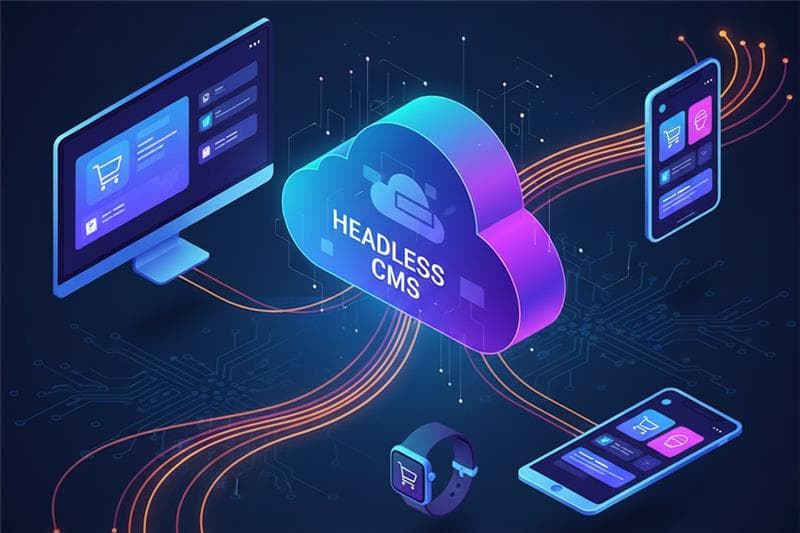
In 2025, headless CMS platforms are transforming how businesses build scalable, flexible websites, especially for e-commerce. By decoupling content management from the presentation layer, these systems deliver content seamlessly across websites, mobile apps, and other channels via APIs. This blog compares two leading platforms, a Git-backed CMS and a structured content CMS, focusing on their strengths, weaknesses, migration strategies, and a step-by-step guide to setting up a simple e-commerce site without diving into code.
What Is a Headless CMS?
A headless CMS manages content in the backend (like product descriptions or images) and delivers it through APIs, allowing developers to use any frontend technology for fast, customized user experiences. Unlike traditional CMS platforms like WordPress, headless CMS offers flexibility for omnichannel delivery, making it ideal for e-commerce sites targeting web, mobile, or smart devices. For examples of headless commerce in real-world scenarios, see how businesses use headless CMS for scalable commerce.
Comparing the Git-Backed CMS and Structured Content CMS
Git-Backed CMS Overview
The Git-backed CMS is an open-source platform that stores content as files in a Git repository. **It's** designed for simplicity, offering a visual editing interface for non-technical users and Git-based workflows for developers. **It's** suited for small to medium-sized e-commerce sites.
Key Features:
- Content stored as files in a Git repository for version control
- Visual editor with real-time previews
- Seamless integration with static site generators
- Free for self-hosted setups; cloud plans start at ~$29/month
Structured Content CMS Overview
The structured content CMS is a robust, hosted platform with a customizable editing environment and cloud-based content repository. It emphasizes real-time collaboration and scalability for complex e-commerce stores or multi-region businesses. For insight into enterprise commerce architectures, see Microsoft's guide to Dynamics 365 commerce architecture.
Key Features:
- Real-time collaboration for multiple editors
- Flexible querying for precise data retrieval
- Customizable editing interface
- Global CDN for fast performance
- Free tier with generous limits; paid plans start at ~$10/month
Pros and Cons
Git-Backed CMS
Pros:
- Cost-effective with free self-hosted options
- Git workflow enables version control
- User-friendly visual editing interface
- Lightweight for fast, static e-commerce sites
Cons:
- Scalability limits for large product catalogs
- Limited integrations with e-commerce platforms
- Basic collaboration features
Structured Content CMS
Pros:
- High scalability for large catalogs or high-traffic sites
- Real-time collaboration for distributed teams
- Flexible content modeling for complex data
- Robust integrations with platforms like Shopify
Cons:
- Learning curve for customizing interfaces
- Costs can increase with heavy API usage
- Complex initial setup
Migration Strategies for E-Commerce Sites
Switching to a headless CMS requires careful planning:
- Assess Content: Map existing product data to the new CMS's structure
- Plan Content Models: Define products and categories, testing in a trial environment
- Export/Import Data: Use CSV or JSON to transfer data
- Connect Frontend: Link the CMS to your frontend via APIs
- Train Team: Provide guides for editors
- Test Before Launch: Verify product pages and SEO elements
- Secure Data: Choose a GDPR/CCPA-compliant CMS
Tip: Test with a small product set (10-20 items). Expect 1-3 weeks for migration.
Walkthrough: Setting Up a Simple E-Commerce Site
Here's how to set up a basic e-commerce site using a structured content CMS, focusing on non-technical steps.
Step 1: Set Up the CMS
- Create a Project: Sign up for the free tier and start a project
- Define Product Structure: Create a "Product" content type with fields like Name, Price, Image, and Description
- Add Products: Enter 5-10 products via the admin interface
Step 2: Build the Frontend
- Choose a Framework: Use a React-based static site generator
- Connect to CMS: Configure the frontend to pull product data via APIs
- Design Layout: Create a product listing page with a grid layout using Tailwind CSS
Step 3: Test and Launch
- Test Functionality: Verify product data, images, and mobile compatibility
- Optimize Performance: Use optimized images and the CMS's CDN
- Launch: Deploy to a hosting platform like Vercel
For a step-by-step visual walkthrough, watch this tutorial on building a headless e-commerce site.
Outcome: A simple e-commerce site with dynamic product listings, ready to scale.
Choosing Between the Two CMS Platforms
Choose the Git-Backed CMS If:
- You're building a small to medium site with a static frontend
- Your team prefers Git workflows or has limited resources
- Budget favors free/low-cost options
Choose the Structured Content CMS If:
- You need scalability for large catalogs or high traffic
- Real-time collaboration is essential
- Your site requires complex data or robust integrations
Overcoming Common Challenges
Git-Backed CMS: File-based storage may slow with large catalogs. Solution: Optimize file organization or use cloud hosting
Structured Content CMS: Customizing interfaces requires expertise. Solution: Use pre-built templates
Data Migration: Risks include data loss. Solution: Test in a staging environment
Costs: Monitor usage to control expenses
Editor Training: Provide training for intuitive dashboards
The Future of Headless CMS for E-Commerce
In 2025, headless CMS platforms are essential for scalable, omnichannel e-commerce. The Git-backed CMS offers simplicity for small businesses, while the structured content CMS delivers scalability for growing stores. Test one platform with a small project to evaluate its fit and scale as needed.
Related reads


Accelerate your roadmap with AI-driven engineering.
Click below to get expert guidance on your product or automation needs.