AI Automation in Manufacturing: Predictive Maintenance to Quality Control
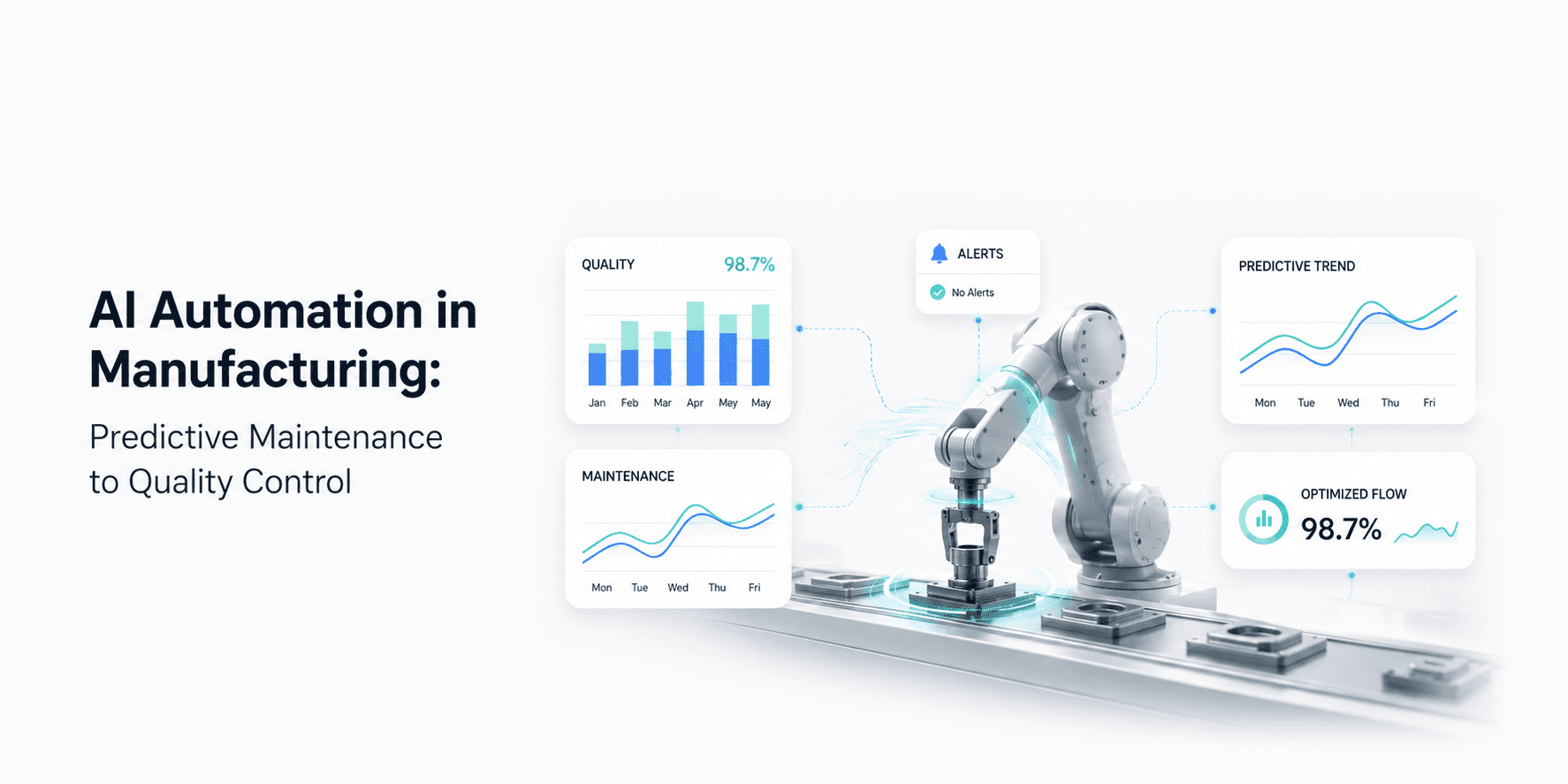
Manufacturing AI that predicts problems before they happen.
Modern manufacturing plants generate terabytes of sensor data every day. Vibration readings, temperature logs, pressure gauges, production line speeds, and quality inspection images flow constantly from every piece of equipment on the floor. Most of that data goes unused.
AI automation transforms that raw data into predictive insights: when a machine will fail, which batches will have quality issues, where bottlenecks are forming, and how to optimise production schedules in real time. The result is less downtime, fewer defects, and higher throughput without adding capacity.
45%
reduction in unplanned downtime reported by manufacturing plants using AI-powered predictive maintenance, with average payback periods under 12 months.
6 Workflows Driving Manufacturing ROI
These workflows address the highest-cost problems in manufacturing: unplanned downtime, quality failures, inventory waste, and production inefficiency.
Predictive Maintenance
AI analyses vibration, temperature, and acoustic sensor data to predict equipment failures days or weeks before they happen. Maintenance is scheduled during planned downtime, not during production runs. The models improve continuously as they learn each machine's degradation patterns.
45% reduction in unplanned downtimeAutomated Visual Quality Inspection
Computer vision models inspect products on the line at speeds and consistency levels humans cannot match. Detects surface defects, dimensional variances, and assembly errors in real time. Defective items are automatically diverted before reaching packaging.
35% reduction in defect ratesProduction Schedule Optimisation
AI considers order priorities, machine availability, changeover times, material constraints, and energy costs to generate optimal production schedules. Re-optimises in real time when disruptions occur, automatically adjusting downstream operations.
18% improvement in throughputSupply Chain Demand Forecasting
Predictive models analyse historical demand, market signals, weather data, and economic indicators to forecast demand at the SKU level. Automatically generates purchase recommendations and adjusts safety stock levels.
28% reduction in excess inventoryEnergy Consumption Optimisation
AI monitors energy usage across equipment and processes, identifies waste patterns, and adjusts settings for optimal consumption. Schedules energy-intensive operations during off-peak periods and detects anomalies that indicate equipment inefficiency.
15-20% energy cost reductionSafety Incident Prevention
Computer vision and sensor data detect unsafe conditions in real time: workers without PPE, equipment operating outside safe parameters, environmental hazards. Automated alerts trigger before incidents occur, not after.
60% reduction in safety incidentsData Infrastructure Requirements
Manufacturing AI depends entirely on the quality and accessibility of your operational data. Before implementing automation, ensure your data foundation is solid.
Sensor Connectivity
IoT sensors must stream data reliably to a central platform. Legacy equipment may need retrofit sensors. Plan for edge computing to handle latency-sensitive applications like quality inspection.
Data Historisation
AI models need historical data to learn patterns. A minimum of 6-12 months of time-series data is typically required for predictive maintenance models to reach useful accuracy levels.
System Integration
ERP, MES, SCADA, and CMMS systems must share data bidirectionally. AI-generated insights need to flow back into operational systems to trigger actions automatically.
Data Quality
Sensor drift, calibration errors, and missing data points will compromise model accuracy. Implement data validation and cleansing pipelines before feeding data to AI models.
ROI Benchmarks
8-14 months
Average payback period
10-25%
OEE improvement
25-35%
Maintenance cost reduction
Industry data: According to McKinsey, AI-driven predictive maintenance alone can reduce machine downtime by 30-50% and increase machine life by 20-40%. The compounding effect across multiple workflows delivers transformational ROI.
Implementation Roadmap
Data Audit and Sensor Readiness
Assess existing sensor coverage, data quality, and system integration points. Identify gaps. Install retrofit sensors where needed. Begin data historisation.
Predictive Maintenance Pilot
Start with one production line or critical machine. Train models on 6+ months of historical data. Run predictions alongside existing maintenance schedules to validate accuracy.
Quality Inspection Deployment
Deploy computer vision quality inspection on highest-defect product lines. Train on known-good and known-defective samples. Validate against human inspection results.
Production Optimisation
Layer in schedule optimisation, energy management, and demand forecasting. These build on the data foundation established in earlier phases.
Key Takeaways
Manufacturing plants generate massive volumes of sensor data that goes unused. AI automation turns that data into predictive maintenance, quality control, and production optimisation.
Predictive maintenance alone reduces unplanned downtime by 45% and maintenance costs by 25-35%, with payback periods under 14 months.
Computer vision quality inspection catches defects at line speed with consistency that exceeds manual inspection. Defect rates drop by 35%.
Data infrastructure is the prerequisite. Sensor connectivity, data historisation, and system integration must be in place before AI models can deliver value.
Start with predictive maintenance on critical equipment, validate accuracy, then expand to quality inspection and production optimisation.
Related service: AI Automation Services — end-to-end automation design, build, and deployment for manufacturing operations.
Ready to Automate Your Manufacturing Operations?
We will assess your data readiness, identify the highest-value automation opportunities, and build systems that reduce downtime and improve quality.


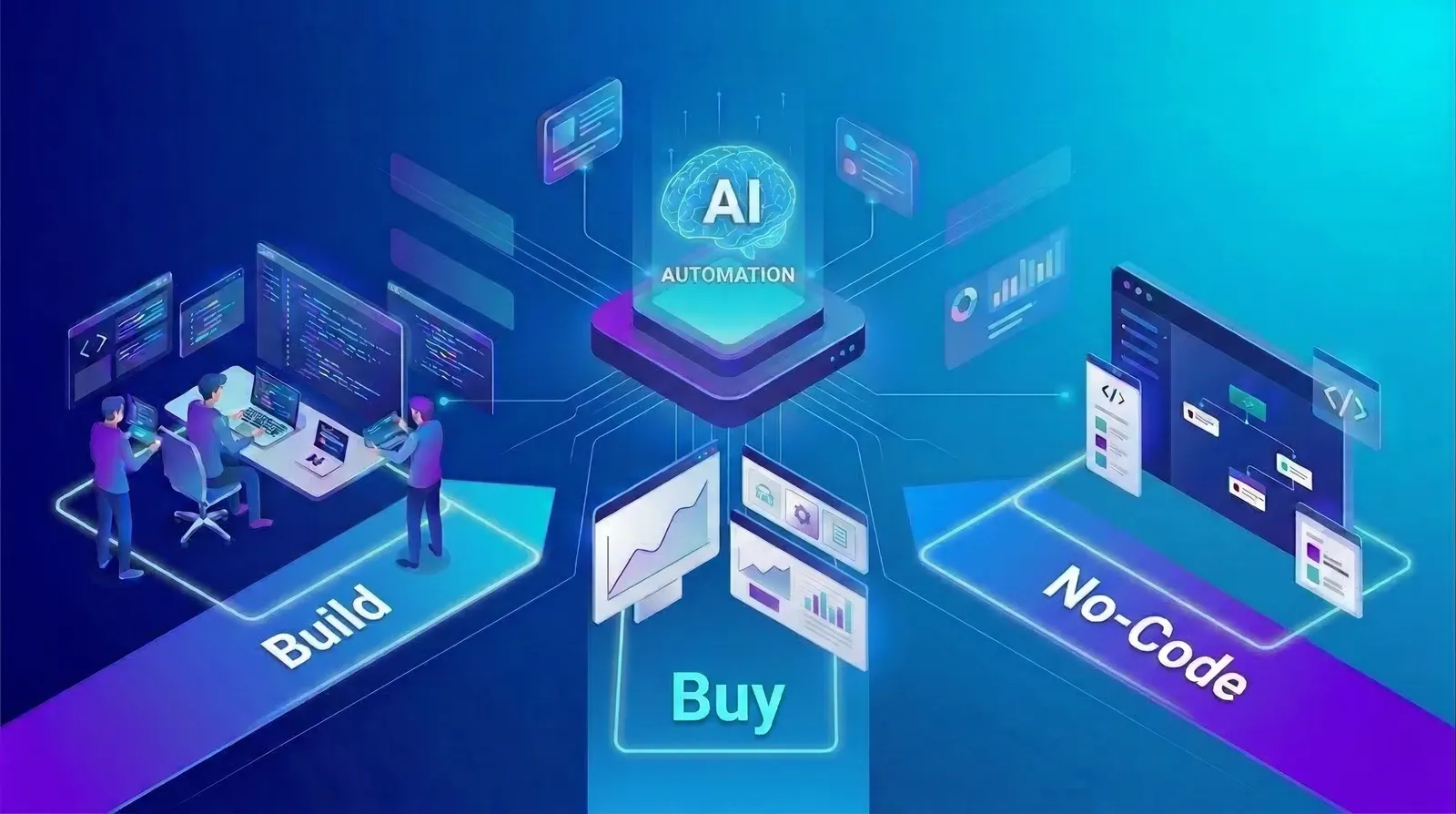

Accelerate your roadmap with AI-driven engineering.
Click below to get expert guidance on your product or automation needs.