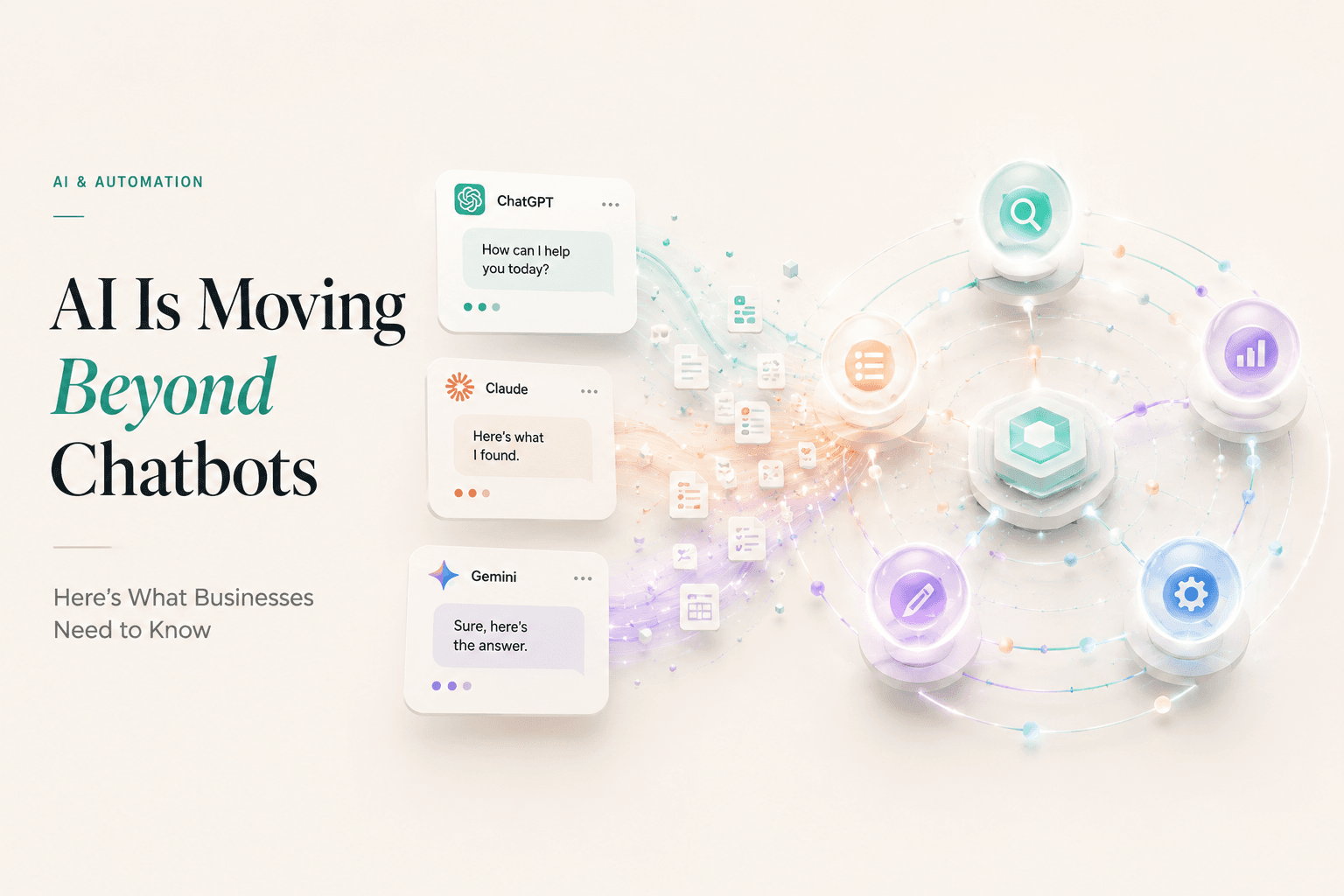
AI Is Moving Beyond Chatbots. Here's What Businesses Need to Know
Quick Answer
Executive Summary
Most people still think of AI as a chatbot that answers questions. But that's changing.
The newest generation of AI can do much more than write content or answer prompts. Businesses are now using AI to help manage tasks, organize information, support customers, prepare reports, and handle repetitive work that normally takes employees hours each week.
The biggest change isn't that AI is getting smarter. The biggest change is that AI is becoming useful enough to help get real work done.
AI Has Changed a Lot in a Short Time
A few years ago, using AI felt exciting because it could answer questions, write emails, and generate content in seconds. Every new AI release seemed to bring something completely new.
Today, things are different.
AI models are still improving, but most businesses are no longer asking: "Which AI model is the smartest?" Instead, they're asking: "How can we use AI to save time, reduce manual work, and improve efficiency?"
That's where the real opportunity is.
The Real Shift Happening Right Now
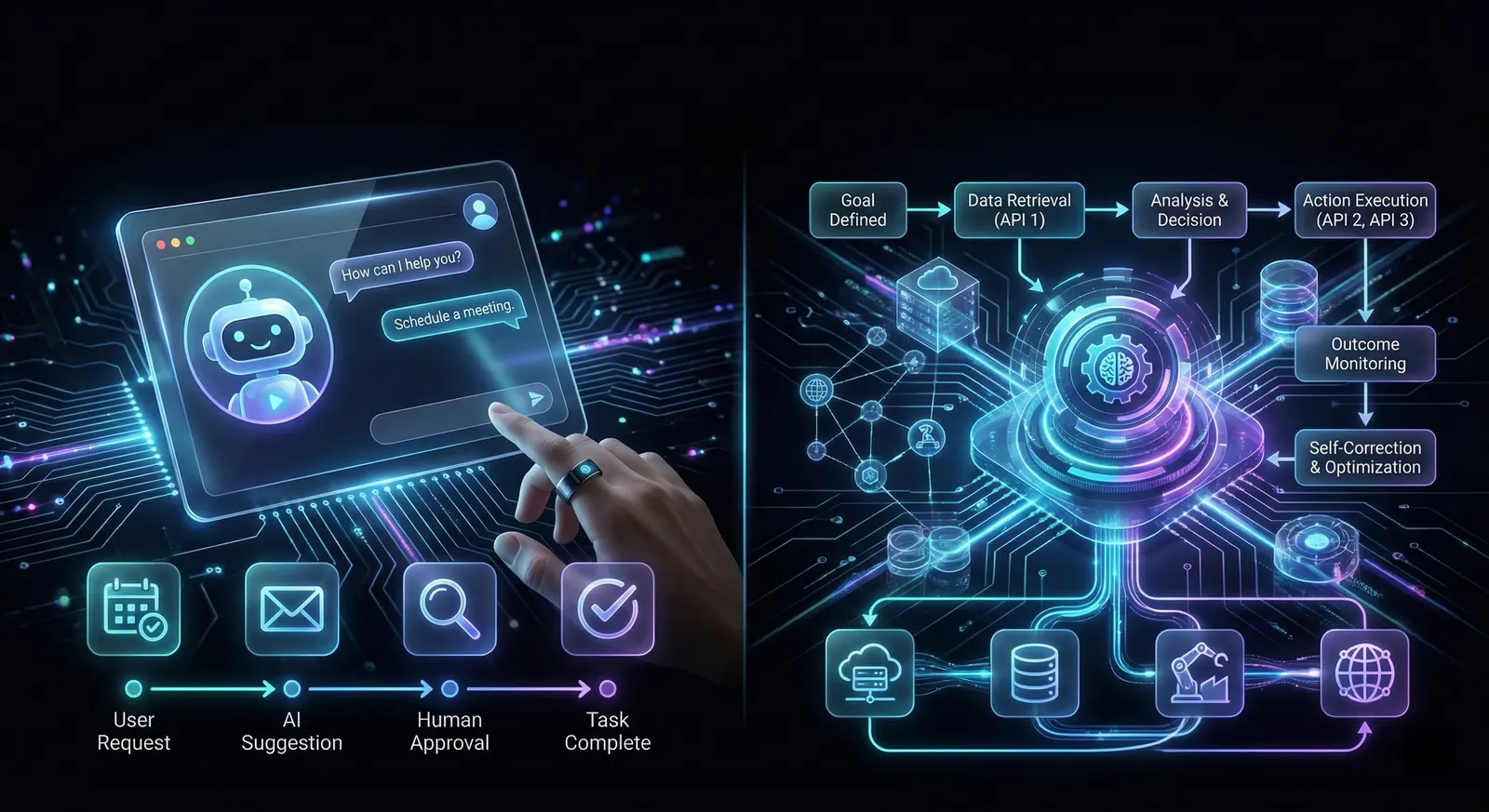
Most businesses start with AI by using tools like ChatGPT to help with individual tasks. Someone asks a question, and the AI provides an answer. That's useful, but it only solves one task at a time.
What companies are beginning to do now is connect AI to their daily workflows. Instead of simply answering questions, AI can:
- Gather information from different systems
- Organize and summarize data
- Create reports
- Update records
- Assist customer support teams
- Qualify leads
- Help manage operations
In other words, AI is starting to act more like a digital teammate than a simple chatbot.
Industry Perspective
McKinsey: The shift to Agentic AI in OperationsResearch confirming the transition from conversational AI tools toward interconnected AI agents capable of executing complex business workflows.
How Businesses Are Actually Using AI in 2026
Why This Matters for Businesses
Every business has work that takes time but doesn't necessarily create value. Examples include:
These tasks are important, but they often consume hours every week. AI is becoming reliable enough to handle many of these responsibilities with minimal supervision. That allows teams to focus on higher-value work instead of repetitive administration.
"The biggest change isn't that AI is getting smarter. The biggest change is that AI is becoming useful enough to help get real work done."
Related Research
Harvard Business Review: Why This Matters for BusinessesMany organizations are discovering that the biggest gains from AI come from redesigning workflows and business processes rather than simply deploying new tools.
From One AI Assistant to Multiple AI Workers
Think about how a team works. One person gathers information, another reviews it, someone else creates recommendations, and another person carries out the task.
| Responsibility | AI Worker |
|---|---|
| Gathers Information | Research Agent |
| Reviews Information | Validation Agent |
| Creates Recommendations | Analysis Agent |
| Communicates Updates | Reporting Agent |
| Executes Tasks | Action Agent |
Instead of relying on a single AI assistant, businesses can create multiple AI-powered workflows that each handle a specific responsibility. Together, these workflows help automate larger business processes from start to finish.
This is why companies are becoming less focused on individual AI tools and more focused on building complete, integrated AI systems.
How Small Businesses Are Using AI to Work Smarter
What This Means for the Future
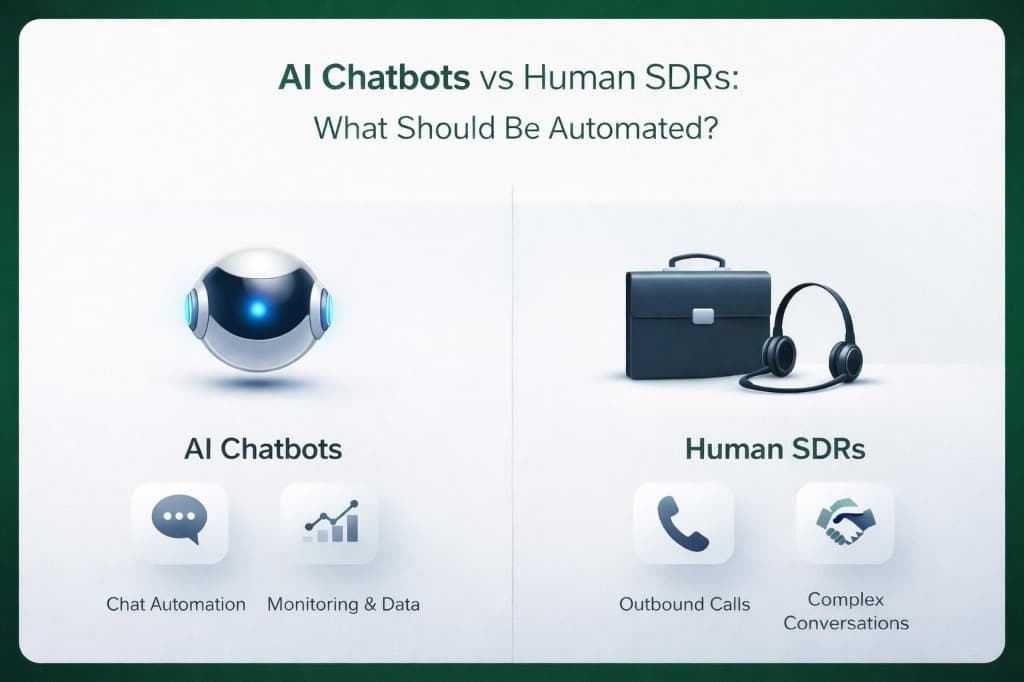
The future of AI is not about replacing people. It's about helping people spend less time on repetitive work.
Businesses that benefit the most from AI will not necessarily be the ones using the newest AI model. They will be the businesses that find practical ways to use AI to improve everyday operations.
The Goal Is Simple:
- ✓Reduce manual work
- ✓Improve efficiency
- ✓Respond faster
- ✓Make better decisions
- ✓Free up teams to focus on more important work
That's where the real value of AI is being created today.
Suggested Videos
What is Agentic AI and AI Agents? The Only Video You Need to Watch
How AI Agents Will Transform in 2026 (a16z Big Ideas)
References & Further Reading
External Research
- McKinsey & Company: The Real Shift Happening Right Now
Businesses are increasingly moving beyond standalone AI assistants and exploring AI systems that can support workflows, decision-making, and operational processes across the organization. McKinsey describes this evolution as a shift toward agentic AI that can reshape workflows and human-machine collaboration.
- Top Agents From Claude 4.8 Opus
Anthropic has released Claude 4.8 Opus with agentic capabilities that can perform complex tasks autonomously. These agents can handle research, content creation, and various business workflows.
- Gartner: Over 40% of Agentic AI Projects Will Be Scrapped by 2027
Strategic view on how managers should integrate AI into workflows.
Tectome Insights
- Tectome: AI Agents vs AI Assistants
Understand the difference between single-task bots and multi-step agents.
- Tectome: Designing Production-Ready AI Workflows
Best practices for deploying reliable AI workflows.
Ready to Put AI to Work?
Many businesses are still experimenting with AI. The companies seeing the biggest results are using it to automate processes, improve workflows, and support their teams.
At Tectome, we help businesses identify practical opportunities for AI automation and build systems that deliver measurable results.
Tags: Operations · Automation · Workflows · Chatbots · AI Agents · Multi-Agent Systems
From our work
Read how we did this for…

Accelerate your roadmap with AI-driven engineering.
Click below to get expert guidance on your product or automation needs.