How Anthropic Is Quietly Rewriting the Rules of Tech in 2026
Every few years, a company does something that forces the rest of the industry to change how it thinks.
Anthropic isn't winning by being the loudest. They're winning by shipping faster, thinking differently, and making bets that most companies wouldn't dare to make.
If you've been loosely following the AI space, you've probably caught fragments: a headline here, a product drop there. This post puts it all together. By the end, you'll understand not just what Anthropic has released in 2026, but why it matters and how it's changing the way the tech world operates.
First, the Numbers That Tell You This Is Serious
Before diving into products, here's the context you need.
Anthropic ended 2025 at $9B in annualised recurring revenue.
By April 2026, that number hit $30B, a 3.3× jump in four months.
The company now has 1,000+ enterprise customers spending >$1M/year.
Claude Code alone generates over $2.5B in annualised revenue.
In February 2026, Anthropic closed a Series G funding round at a $380B valuation, one of the largest in private company history. Investors include GIC, Coatue, Founders Fund, Sequoia, and ICONIQ. Sequoia notably backed both Anthropic and OpenAI simultaneously, breaking a long-standing venture capital rule against funding direct competitors.
These numbers aren't background detail. They're the foundation for understanding why Anthropic has been able to ship at the pace it has in 2026.
The 2026 Timeline
January 2026: The Product That Spooked SaaS
The year opened with a product that most people hadn't seen coming: Claude Cowork.
The idea behind Cowork is straightforward to explain and radical in its implications. Most AI tools work like a very smart assistant you have to supervise constantly. You give it a prompt, it gives you an output, you review it, you prompt again.
Cowork works differently. You give it a goal, and it figures out how to get there on its own.
It runs on your desktop, gets access to the folders you specify, and can read, write, create, and edit files directly.
It can open applications, fill spreadsheets, navigate your browser, draft reports, and organise entire file systems, all without you coordinating each step.
The reaction from financial markets was immediate. The day Cowork launched, global SaaS stocks sold off sharply. Analysts recognised what this meant: if an AI agent can autonomously handle structured knowledge work, the business model of companies like Salesforce, ServiceNow, and Workday faces genuine disruption. The software sector reportedly lost roughly $2T in market cap as investors processed the implications.
By February, Anthropic expanded Cowork into a full enterprise product with connectors for Google Drive, Gmail, DocuSign, and FactSet. Remarkably, Cowork was mostly built by Claude Code itself, four engineers built it in ten days.

February 2026: Models & Computer Use
Anthropic opened February with two significant model releases that redefined what Claude could actually do.
Claude Opus 4.6 (Feb 5): The headline feature was a 1-million-token context window, enough to process entire corporate document libraries in a single session. It also became the top-performing model on the Finance Agent benchmark and set a record for the longest task completion window at 14.5 hours.
Claude Sonnet 4.6 (Feb 17): Faster, cheaper, and genuinely competitive. But buried in the announcement: Claude's computer use performance jumped from under 15% to 72.5% on OSWorld, the standard benchmark for AI agents navigating real computer environments.
Computer use represents a fundamental shift: Not a tool you use, but a worker you delegate to.
February also brought a major international milestone: the opening of Anthropic's Bengaluru office and a strategic partnership with Infosys to deploy Claude in regulated industries including telecom and financial services.
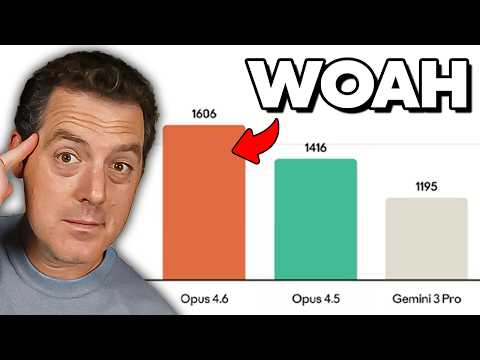
Claude Opus 4.6 Is Now Powering Enterprise Workflows Inside Microsoft Foundry
Microsoft's integration of Claude Opus 4.6 into Microsoft Foundry marks a turning point for enterprise AI adoption. The model's 1-million-token context window and 128K output capacity allow developers to delegate full-lifecycle engineering work — from requirements gathering to implementation and maintenance — without switching platforms. Companies like Adobe, Dentons, and Momentic are already deploying it in production: Dentons uses it to accelerate legal drafting and research across global teams, citing better reasoning as a direct reduction in rework. Macroscope uses it to catch critical bugs before they reach production. And Foundry's built-in governance, security, and auditability make it viable for finance, healthcare, and legal industries where most AI tools have struggled to meet compliance standards.
Read full technical blog here →March 2026: Memory & Control
March was when Anthropic started connecting the dots between everything they'd shipped.
Claude Memory (March 2): Now free for all users. Claude remembers relevant context across sessions, changing the feel of working with Claude from a stateless tool into a persistent colleague.
Claude for Excel and PowerPoint (March 11): Claude moved directly into the office tools most of the world runs on, analyzing spreadsheets and generating slides inside the apps people already use.
Claude Computer Use Agent (March 23): Launched in research preview, giving Claude the ability to see, navigate, and fully control a user's desktop, clicking buttons and completing workflows via Dispatch while the user steps away entirely.
Also in March: The Anthropic Institute launched, and the Claude Code source was leaked, accidentally revealing a wave of upcoming features and model codenames.
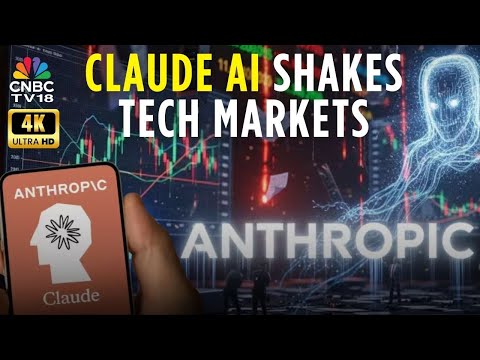
April 2026: The Most Eventful Month
If January through March set the foundation, April was when Anthropic went into overdrive.
Claude Mythos Preview & Project Glasswing: Capable of finding and exploiting software vulnerabilities at a level that saturates internal benchmarks. Anthropic gave defensive professionals early access through Project Glasswing first.
Cybersecurity Consortium: Alongside Mythos, Anthropic launched a consortium spanning Amazon, Apple, Broadcom, Cisco, CrowdStrike, Google, JPMorganChase, the Linux Foundation, Microsoft, NVIDIA, and Palo Alto Networks.
Claude Opus 4.7: A new strongest generally available model, with better coding, higher-resolution vision, and stronger performance on complex, long-running agentic tasks.
Claude Design (Anthropic Labs): A new product that lets anyone create polished visual work from a description, exporting directly to Canva.
Creative Connectors: Connectors for Blender, Adobe, Autodesk, Ableton, and Splice brought Claude into professional creative software workflows.

Claude Mythos Preview
Anthropic's newly announced Claude Mythos represents a paradigm shift in offensive and defensive cybersecurity capabilities. Capable of finding and exploiting software vulnerabilities at a level that saturates internal benchmarks, Mythos is designed for rigorous red-teaming. Through Project Glasswing, Anthropic is granting early access exclusively to defensive professionals to ensure critical infrastructure is hardened before broader availability.
Read full technical blog here →The Strategic Pattern
The Thread Running Through All of It
Looking across everything Anthropic has shipped in 2026, a clear pattern emerges, and it's more interesting than just "they released a lot."
Three major shifts define their strategy:
“Cowork doesn't help you draft, it drafts. Claude Code doesn't suggest code, it writes, tests, and ships it. Design doesn't generate ideas for a slide, it makes it.”
This isn't just about shipping features, it's about global infrastructure. From Bengaluru to Tokyo, Anthropic is positioning Claude as the backbone of the next economy, backed by compute deals at a scale few organizations can match.
Why This Matters Beyond the Headlines
The tech industry has a habit of treating AI announcements as a scoreboard: who's ahead, who's behind, who topped which benchmark.
Anthropic's 2026 is doing something more consequential than winning a scoreboard. It's establishing what the next generation of knowledge work actually looks like: AI that holds memory, takes initiative, works across your files, and completes tasks end-to-end.
Ready to Implement Agentic AI?
It's not just impressive, it's a genuinely new way of working. That's what it looks like when a company isn't just building better products, it's building a new category.
Related reads
How AI is rewriting the rules of the video industry in 2026
By Pradhuman Singh, 07 May 2026
The AI Literacy Imperative: Why Every Non-Technical Professional in Tech Must Get Fluent in 2026
By Divyanshu Sharma, 22 Apr. 2026
The Rise of AI Agents:Why Businesses That Ignore Them Will Fall Behind
By Tectome, 25 Sept. 2025
From our work
Read how we did this for…

Accelerate your roadmap with AI-driven engineering.
Click below to get expert guidance on your product or automation needs.